

PROLOGUE: A SEED PLANTED IN STRUGGLE
The Northeastern Conference is more than an institution—it is a living story of faith, diligence, and divine providence. It is the story of men and women who longed for dignity, prayed for opportunity, and refused to let discrimination silence their call to mission.
In the years after emancipation, African American Adventists brought zeal and courage to the growing Advent movement. Charles Kinney, the first Black Adventist minister, pleaded for equality and pressed the church to recognize Black Adventists as full partners in mission. Ellen White, James White, and Joseph Bates lifted their voices against slavery and called for evangelizing the freedmen.
Despite these convictions, discrimination persisted. Black Adventists never sought separation; they sought full equality and integration. The church’s response in 1944 reflected the culture of America itself: “separate but equal.” Regional conferences were established, and what was meant to limit became the very soil in which the mission took root.
Out of this tension and faith, a new chapter began. On October 3, 1944, at the City Tabernacle church in New York City—then the Temple church—the storied history of the Northeastern Conference took root. With 15 congregations and 2,208 members, the Northeastern Conference of Seventh-day Adventists was organized, and its operations began on January 1, 1945. It had no offices, no buildings, and no wealth, but it had something more dynamic: faith that God would make a way. Scripture declares, “Do not despise these small beginnings, for the Lord rejoices to see the work begin” (Zechariah 4:10, NLT).
THE FOUNDING YEARS: BLAND AND IRONS
 The conference elected its first president, Louis H. Bland, with Elder L. O. Irons as secretary-treasurer. They worked without equipment or infrastructure but with resolute faith. Headquarters moved from borrowed rooms at Ephesus church in Harlem to Carlton Hall—where Ephesus operated Harlem Academy—and finally to the Temple Building on West 150th Street. By 1950, membership had doubled. Four elementary schools were launched, Northeastern Academy was founded, and in 1955, the Conference acquired Victory Lake Campground. From the start, education and evangelism stood side by side as the twin pillars of the conference’s identity.
THE 1950s AND 1960s: SINGLETON AND HUDSON

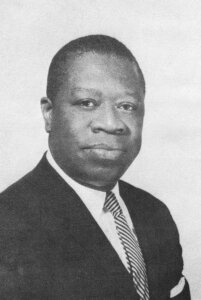
Harold D. Singleton succeeded Bland in 1954 and advanced evangelism while securing Victory Lake Camp as a permanent spiritual bastion. Then came R. T. Hudson in 1962, a preacher whose thunder filled Harlem and beyond. His evangelistic campaigns led hundreds to baptism, inspiring a movement of lay members who carried the gospel into neighborhoods and homes. Under his leadership, the first Haitian congregation, Hebron in Brooklyn, was organized. Northeastern began to reflect the global mosaic of Adventism.
THE 1970s: GEORGE R. EARLE—THE BUILDER
 George R. Earle led for nearly 20 years, guiding the Conference through growth and stability. Membership passed 22,000. Institutions such as Northeastern Towers, the Adventist Community Services Center, and Northeastern Academy’s Manhattan building became monuments to faith and vision.
Earle’s administration proved that evangelism and education could be matched with lasting institutions, ensuring that the work would stand firm.
THE 1980s AND 1990s: NEWTON AND BROOKS
 Leonard C. Newton emphasized evangelism, stewardship, and pastoral training, preparing a new generation of leaders. He oversaw the construction of a new cafeteria at what is now called Camp Victory Lake.
 Stennett H. Brooks followed in 1987 and brought discipline, institutional stability, and evangelistic fervor. Under his leadership, mass crusades filled stadiums and auditoriums, and the Gift of Love telecast carried the Adventist message to countless homes. By the time the conference celebrated its 50th anniversary in 1994, Northeastern had 118 churches, 40,000 members, 14 schools, and 300 workers.
THE 2000s: KING, BAKER, AND HONORÉ


 During his tenure, Donald G. King emphasized innovation, modernization, and fiscal accountability. He led the Northeastern Conference to join the Seventh-day Adventist Regional Retirement Plan, a retirement plan designed to secure dignity for every retiree.
A pastor at heart, Trevor H. C. Baker led with compassion and vision from 2002 to 2012. He championed Adventist education, strengthened pastors, and pressed the work of evangelism forward.
Succeeding him, Daniel L. Honoré guided the conference through modernization, strengthening stewardship, acquiring properties, and updating infrastructure—all while keeping the mission central. His steady leadership during the worldwide pandemic brought hope in the midst of despair.
THE 2020s: JULES AND KING

 Abraham J. Jules, elected in 2021, shepherded the conference in the post-pandemic era. He renewed the call to revival and mission, anchoring Northeastern once more in its evangelistic identity.
In 2024, the mantle passed to Eldeen C. King. He is no stranger to Northeastern, its pulpits, or its people. He has preached its revivals, shepherded its congregations, dedicated its children, and prayed over its sickbeds. His ministry is characterized by godliness, humility, and strength. King’s leadership rests on fourcommitments: education, evangelism, empowerment, and elevation. He believes in strengthening schools, expanding evangelistic campaigns, equipping members for leadership, and calling the entire body to rise higher in spiritual life and institutional excellence. Though he is a steward of finances, his greatest concern is the spiritual health of the conference. For him, money is a tool, but revival is the mission.
 A CONFERENCE OF DIVERSITY
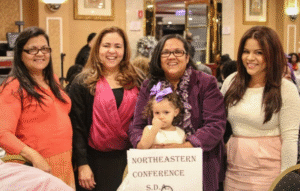
What began as an African American-led work has become a multicultural symphony. Northeastern congregations now worship in more than nine languages: English, Spanish, French, Haitian Creole, Portuguese, Yoruba, Igbo, Twi, and Karen. Walk into a Northeastern church and you will hear hymns sung with accents from across the globe, each lifted to the same Lord. The gospel is preached with island rhythms, African fire, and urban urgency. The Pentecost promise lives in Northeastern: every nation, kindred, tongue, and people.
LAY LEADERSHIP AND LEGACY
Not to be forgotten is the work of laypeople. Many of Northeastern’s congregations began through the efforts of members who were never on the payroll of the conference. They opened homes for Bible study, rented storefronts for worship, and gathered small groups in prayer until churches were established. Their sacrifices, offered alongside daily work and family life, multiplied the reach of the gospel and proved that the strength of Northeastern has always rested not only on its pastors but also on its people.
WOMEN: NURTURERS OF FAITH, BUILDERS OF LEGACY
If Northeastern is a tree now standing tall, its roots have been nourished for 80 years by the faith and sacrifice of women. In classrooms, they built the foundation of Adventist education, serving as teachers, principals, and mentors to generations of young people. In churches, they lifted their voices in choirs, pioneered children’s ministries, and stood as Bible workers, evangelists, and prayer warriors whose labor multiplied the harvest.
Many of the conference’s greatest evangelistic campaigns were fueled by the tireless efforts of female Bible workers who led thousands to Christ. Women have also served as leaders, administrators, and conference directors, breaking barriers and broadening the ministry’s reach. Today, their legacy continues as Northeastern now boasts six female pastors serving congregations and one female seminarian preparing to join their ranks. Their presence at the pulpit is not an anomaly but the fruit of a long history of service and sacrifice.
As the conference looks toward its future, it does so standing on the shoulders of these women of faith, who remind us that the Spirit is poured out on all flesh, and that both sons and daughters are called to prophesy, to preach, and to proclaim the everlasting gospel.
TWIN PILLARS: EVANGELISM AND EDUCATION
Through every president, one truth has remained constant. Evangelism is the heartbeat, and education is the backbone. Evangelism filled tents, stadiums, churches, and theaters. Education raised up doctors, pastors, teachers, and leaders who now serve across the world. Camp Victory Lake molded youth into disciples. Northeastern Adventist Academy has taught faith alongside excellence. In tandem, education and evangelism have created a conference that grew not only in numbers but in spiritual and institutional depth.
A YEAR OF MILESTONES
 The year 2025 marks several significant milestones in the life of the Northeastern Conference. It marks not only the Conference’s 80th anniversary but also Camp Victory Lake’s 70th year as a gathering place for worship, youth ministry, and fellowship. The Hebron church in Brooklyn also reaches its 70th anniversary, recognized as the beginning of the Franco-Haitian work in the conference. In addition, the conference office building marks 50 years since its construction and still serves as the administrative center today. These anniversaries stand as markers of progress and stability, pointing both to the past achievements of the conference and to the work still ahead.
THE CLARION CALL AT EIGHTY
Eighty years is not simply a commemoration—it is a challenge.
Dr. Martin Luther King, Jr. once said, “Faith is taking the first step, even when you don’t see the whole staircase.” That is the Northeastern story. Our pioneers did not see the whole staircase, but they stepped forward anyway, and God built the way as they climbed.
The harvest remains plentiful. The needs of our cities are great. Families are hungry for the gospel. Children are longing for education that shapes both heart and mind. Immigrants are searching for belonging. Communities need healing. The mission remains.
The Bible calls us to labor with urgency: “The harvest is plentiful but the workers are few. Ask the Lord of the harvest, therefore, to send out workers into his harvest field” (Matthew 9:37-38, NIV).
CONCLUSION: EVEN SO, COME LORD JESUS
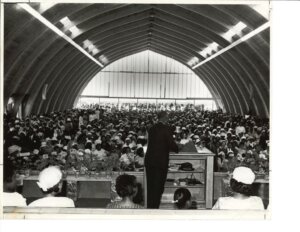 From 15 congregations to more than 220. From 2,208 members to over 66,000. From modest means to a financially strong conference. Northeastern is living proof that what God begins, He sustains.
We honor the presidents who carried the torch, the pastors and teachers who gave their all, and the members whose prayers and sacrifices made this history possible. Yet above all, we honor Christ, who has led us every step of the way.
Ellen White’s counsel is still true: “We have nothing to fear for the future, except as we shall forget the way the Lord has led us, and His teaching in our past history” (Life Sketches of Ellen G. White, p. 196).
So let us not forget. Let us recommit. Let us rise with renewed urgency. Evangelize. Educate. Empower. Elevate.
The time is short, the fields are ripe, and the kingdom of God is at hand.
Even so, come Lord Jesus.
_________________________
Photo caption: The first five regional conference presidents, from left to right: Herman R. Murphy, South Central; John H. Wagner, Allegheny; Louis H. Bland, Northeastern; Harold D. Singleton, South Atlantic; and J. Gershom Dasent, Lake Region. Singleton later succeeded Bland at Northeastern in 1954.
Photos courtesy of the General Conference of Seventh-day Adventists archives, the Northeastern Conference, and the Atlantic Union Gleaner archives.
